From Google to AI Search: Don't Get Left Behind in 2025
The way customers find businesses is fundamentally changing. AI-powered search is replacing traditional Google results, and if your business isn't optimized for this shift, you're becoming invisible to potential customers.
The Search Revolution Happening Right Now
Remember when "Google it" became a verb? That era is ending. Right now, millions of people are abandoning traditional search engines for AI-powered alternatives like ChatGPT, Claude, and Perplexity. They're not just looking for links—they're having conversations and getting direct answers.
Here's what this means for your business: If you're only optimized for traditional Google search, you're becoming invisible to a rapidly growing segment of customers.
How AI Search is Different (And Why It Matters)
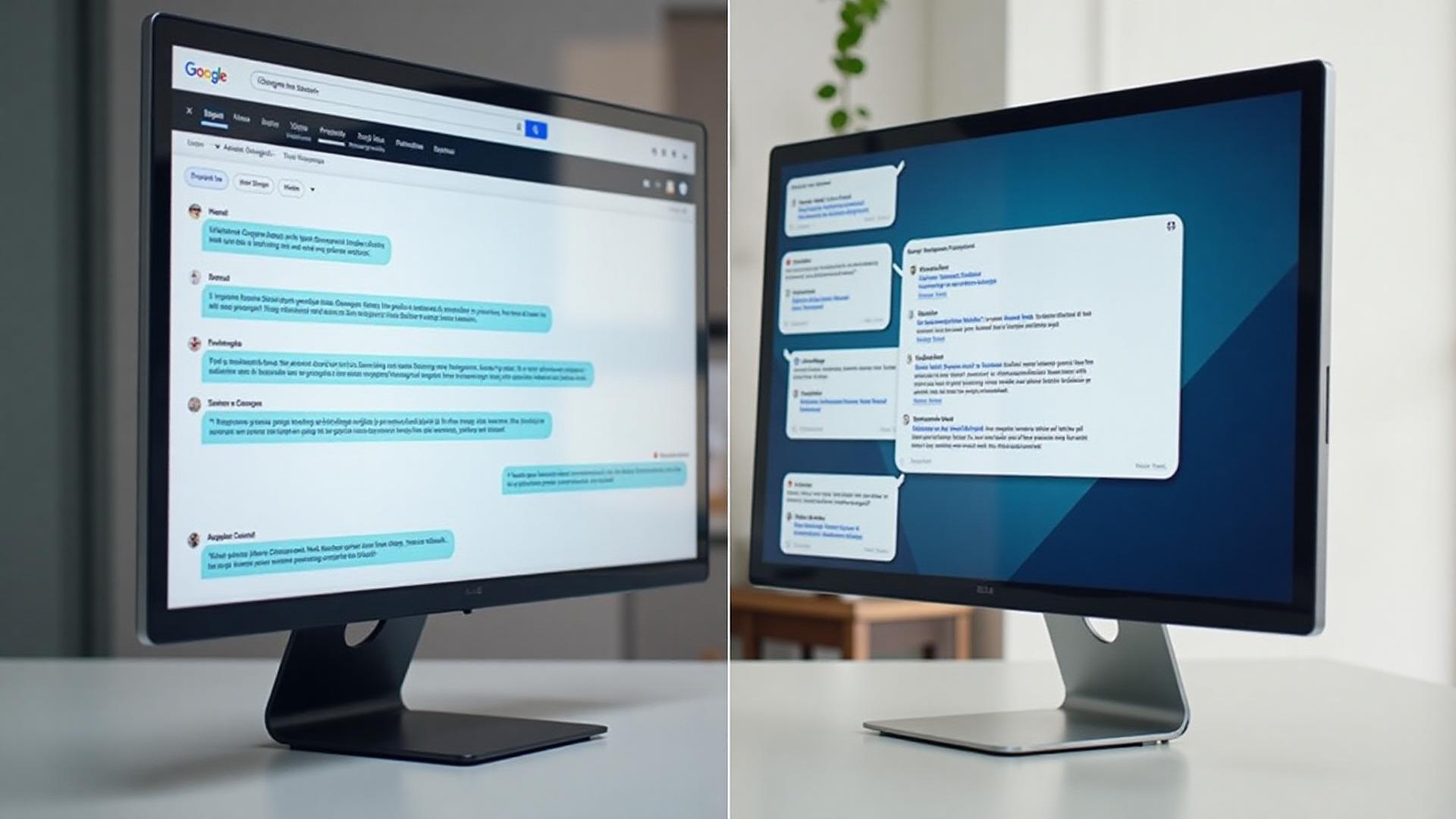
Traditional Google Search
- Users type keywords: "best plumber near me"
- Google shows 10 blue links
- Users click through multiple websites
- Your ranking depends on SEO tactics from 2010
AI-Powered Search
- Users ask natural questions: "I have a leaky faucet in my kitchen. Who should I call and what will it cost?"
- AI provides direct, conversational answers
- AI references specific businesses with context
- Your visibility depends on being mentioned in AI training data and having clear, structured information
The shift is profound. Users aren't just finding different results—they're searching in an entirely different way.
The Numbers Don't Lie
Consider these statistics from late 2024:
- ChatGPT receives over 100 million queries per day
- 42% of Gen Z users now prefer AI search over traditional search engines
- Perplexity AI's usage grew 300% in just six months
- Google is scrambling to integrate AI into search results with "Search Generative Experience"
This isn't a future trend—it's happening now. And early data shows that businesses optimized for AI search see 3-4x higher conversion rates from AI-sourced traffic.
Real Impact on Small Businesses
Case Study: Anderson's Auto Repair
For 15 years, Anderson's Auto Repair dominated local Google search results. Their traffic from traditional search dropped 35% in 2024. Why? When potential customers asked AI assistants "where should I get my brakes repaired in Austin?", Anderson's wasn't mentioned. Meanwhile, a newer competitor who had structured their online information for AI visibility captured those referrals.
The wake-up call: Anderson's spent $2,000/month on SEO for Google but was invisible in the AI era. After restructuring their online presence for AI search (covered below), they regained—and exceeded—their previous customer volume within 90 days.
Why Traditional SEO Isn't Enough
Traditional SEO focused on:
- Keyword density
- Backlinks
- Meta tags
- Page load speed
AI search values:
- Clear, natural language descriptions
- Structured data and context
- Authentic reviews and testimonials
- Specific answers to common questions
- Real expertise and authority signals
Google's algorithm looked for signals that you're popular. AI looks for signals that you're helpful and credible.
How to Optimize for AI Search (without QM)
1. Create an Extensive FAQ Section
AI models love structured Q&A content. Create a comprehensive FAQ that answers every conceivable customer question in natural language. Don't just optimize for keywords—write how humans actually speak.
Instead of: "Expert HVAC services, affordable rates, 24/7 availability"
Write: "We're a family-owned HVAC company serving Springfield for 20 years. Our emergency service is available 24/7, and our average response time is under 2 hours. Most repairs cost between $150-$400 depending on the issue."
2. Add Structured Data Markup
Schema markup helps AI understand your business. Implement LocalBusiness schema that clearly defines:
- Services offered
- Pricing ranges
- Service areas
- Hours of operation
- Special certifications
3. Claim and Optimize All Business Listings
AI pulls from multiple data sources. Ensure consistency across:
- Google Business Profile
- Yelp
- Industry-specific directories
- Social media profiles
Inconsistent information (different phone numbers, addresses, or business descriptions) confuses AI and reduces your visibility.
4. Focus on Authentic, Detailed Reviews
AI values detailed customer experiences over brief star ratings. Encourage customers to write specific reviews that mention:
- The problem they had
- How you solved it
- Why they chose you
- What made the experience positive
5. Create Educational Content
Blog posts, videos, and guides that genuinely help customers make AI view you as an authority. Focus on answering "why," "how," and "what should I know" questions.
The Conversation Interface Advantage
Here's the opportunity: AI search is conversational. When someone asks "What should I look for in a wedding photographer?", an AI might explain key criteria and then say, "Based on these factors, businesses in your area that excel include..."
If your website clearly articulates what makes you great (not just that you're great), AI can understand and communicate your value proposition to potential customers.
What Happens If You Don't Adapt?
The harsh reality: Businesses that don't optimize for AI search will become progressively more invisible.
Consider the timeline:
- Q1 2025: 25-30% of local search happening through AI
- Q4 2025: 40-50% of search queries AI-mediated
- 2026: AI search becomes dominant for under-40 demographic
- 2027: Traditional search relegated to specific use cases
Businesses that wait until 2026 to optimize will have already lost 18-24 months of potential customers to competitors who acted sooner.
The Cost-Benefit Reality Check
Optimizing for AI search doesn't require a massive investment:
- Restructuring your website content: 10-20 hours or $500-2000 if outsourced
- Creating comprehensive FAQ: 5-10 hours
- Implementing structured data: 3-5 hours or $300-800 outsourced
- Ongoing content creation: 2-4 hours weekly
Compare this to losing 30-40% of your potential customer base to competitors who show up in AI search results while you don't.
Take Action This Week
Don't wait for perfect. Start with these three immediate steps:
- Test your AI visibility: Open ChatGPT or Claude and ask: "What are the best [your business type] in [your city]?" Are you mentioned? How are you described?
- Audit your business information: Google yourself and check if your basic information (hours, services, contact) is consistent everywhere it appears online.
- Write 10 detailed FAQ answers: Start with the 10 most common customer questions. Write comprehensive, helpful answers in natural language.
The Window Is Closing
Right now, AI search optimization is still a competitive advantage. Within 12-18 months, it will be table stakes—something every business must do just to compete.
The businesses winning in 2025 and beyond won't be the ones with the biggest marketing budgets. They'll be the ones who recognized this shift early and adapted while their competitors hesitated.
The question isn't whether AI search will dominate—it's whether you'll be visible when it does.
About the Author
QuickMorph Team
Experts in AI-powered business transformation helping small businesses thrive in the digital age.
What this costs, in plain numbers
Builds run $500 to $2,500 once, and $50 a month covers hosting, edits, and monitoring. You own the site. No retainer, no discovery-call gate.